Traditional vs Infrared: Which Sauna Heater Suits You on a Budget
On a tight budget, the better choice depends less on the heater’s sticker price and more on your electrical situation and how you plan to use it. A traditional electric heater typically costs less to buy but needs a dedicated 240-volt circuit that can add several hundred dollars in installation. Infrared panels often cost more per square foot up front but frequently run on a standard 120-volt outlet, which can mean little or no new wiring at all. The cheaper overall choice depends entirely on which of those two costs your specific home avoids.
For the Apartment or Condo Owner
Anyone in a rented or shared space with limited ability to run new wiring should lean toward infrared. Panels mount flat against an existing wall, need less clearance than a freestanding heater and guard rail, and commonly plug into a standard outlet already in the room. A traditional heater’s dedicated circuit requirement is often simply not practical in a rental, which makes infrared the realistic budget choice here even though the panels themselves may cost somewhat more than a comparable traditional unit.
For the Garage or Basement Gym Owner
A detached garage or an unfinished basement corner being converted into a small cabin frequently needs new electrical work regardless of heater type, since these spaces often lack adequate circuits for either option. Once an electrician is already running a new line, sizing that circuit for a traditional 240-volt heater adds comparatively little extra cost over wiring for infrared’s 120-volt needs, which shifts the calculation back toward traditional heat, particularly for anyone who wants the higher peak temperature and steam option a garage conversion has the space to support.
For the Family Backyard Cabin
A larger family-size cabin, built to fit three or four people at once, usually needs a traditional heater’s higher output regardless of budget, since scaling infrared to cover a bigger family room typically means adding more panels, which raises the panel-side cost faster than a single larger traditional heater’s price climbs. For this use case, a traditional heater’s greater raw heat output per dollar tends to make it the more budget-efficient option once room size passes roughly three or four people.
For Someone Who Uses It Daily but Briefly
Infrared’s faster warm-up, often 10 to 15 minutes versus 30 to 45 for a traditional heater reaching full stone temperature, suits a short, frequent-use pattern well, since less of each session gets spent waiting to heat up. For someone squeezing a 20-minute session into a lunch break or before work daily, that faster warm-up adds up to real time saved over a year, which is worth weighing against infrared’s typically higher panel cost for a similarly sized space.
For Someone Who Wants Steam and Longer Weekend Sessions
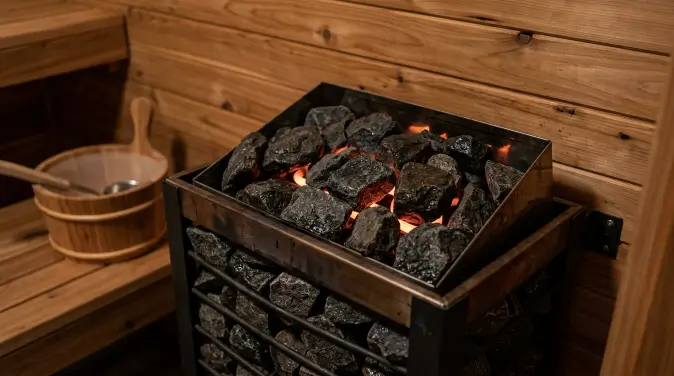
If steam and the classic high-heat experience matter, only a traditional heater with stones delivers it, since infrared panels have no stone mass to pour water over. Someone planning fewer, longer sessions, a weekend ritual rather than a daily quick heat, gets more value from a traditional heater’s higher peak temperature and steam option, and the longer warm-up matters less when sessions are already planned well in advance rather than squeezed into a tight daily window.
Comparing Real Prices Once You Know Which Type Fits
Once electrical situation and use pattern point toward one type, comparing actual listed prices for that category, rather than a general sense of what heaters cost, is the next useful step. A shopper can browse the collection to see current traditional and infrared options side by side with their kilowatt or wattage ratings, which makes it easier to confirm a specific unit fits both the intended room and the electrical work already planned before finalizing a purchase.
Does One Type Deliver a Stronger Research-Backed Case?
The health research behind sauna use is built almost entirely on traditional Finnish-style sauna bathing at higher temperatures, generally 170 to 195 degrees Fahrenheit, rather than on lower-temperature infrared sessions specifically. A review in Mayo Clinic Proceedings summarized cardiovascular associations from cohort studies using that traditional heat pattern. A separate review in the American Journal of Physiology examined physiological responses to Finnish-style sauna heat specifically. This does not mean infrared has no benefit, but buyers choosing infrared for practical reasons, like avoiding new wiring, should know the strongest published research reflects the traditional, higher-heat pattern rather than infrared’s lower-temperature sessions.
See also: Office 2021 Lifetime : Cost, Features, and Lifetime Access
The Bottom Line for a Budget-Minded Buyer
There is no universally cheaper option between the two; it depends on whether your home already has spare 240-volt capacity, how many people will use it, and whether frequent short sessions or occasional longer ones fit your routine better. Pricing the actual electrical work required for each option in your specific space, not just the heater itself, is the single step most likely to reveal which type is genuinely the better budget fit for your situation rather than assuming one category is always cheaper than the other.
Comparing Running Costs, Not Just Purchase Price
Traditional heaters generally draw more power to heat a stone mass to a higher peak temperature, while infrared panels warm at a lower wattage and lower target temperature, which tends to make infrared cheaper to run per session, often by a meaningful margin over a year of regular use. That gap narrows for someone taking fewer, longer traditional sessions rather than frequent short infrared ones, since total energy use depends on session frequency and length as much as wattage. Anyone budgeting month to month rather than just for the purchase should weigh typical session length and frequency against each type’s wattage, not assume the cheaper heater to buy is automatically the cheaper one to own.
Maintenance Differences Worth Factoring In
A traditional heater has stones that need periodic rinsing and eventual replacement, along with an element that has a finite service life measured in years of regular use. Infrared panels have no stones and generally fewer moving parts, though the panels themselves are the component that eventually needs replacing rather than a swappable heating element. Neither type is meaningfully harder to maintain than the other, but budgeting a small annual amount for stones on a traditional heater, or simply accounting for eventual panel replacement on an infrared setup, avoids being surprised by either cost years down the line.
Frequently Asked Questions
Is traditional or infrared cheaper for someone on a tight budget? Traditional heaters usually cost less to buy, but infrared often avoids a new 240-volt circuit, which can make it cheaper installed.
Which type suits an apartment or condo dweller best? Infrared, since panels need less clearance and often use an existing 120-volt outlet.
Which type suits someone building in a detached garage or shed? Either works well, since new wiring is often needed regardless of heater type there.
Which type suits a household that wants steam? Only a traditional heater with stones offers steam, since infrared has no stone mass.
References
- Cardiovascular and Other Health Benefits of Sauna Bathing: A Review of the Evidence, Mayo Clinic Proceedings, 2018
- Effects of heat and cold on health, with special reference to Finnish sauna bathing, American Journal of Physiology, 2018
- Benefits and risks of sauna bathing, The American Journal of Medicine, 2001
By Felix Amara