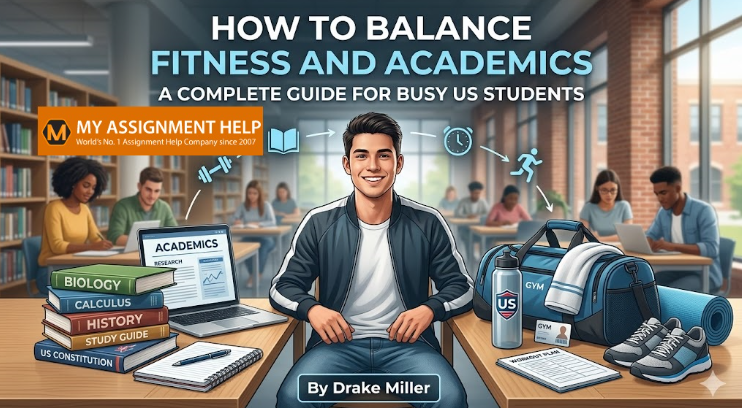
How to Balance Fitness and Academics: A Complete Guide for Busy US Students
The life of a modern American student—whether navigating the hallways of a high school in Ohio prepping for AP exams or managing a packed lecture schedule as a university freshman in California—is an intricate, high-stakes balancing act. Between maintaining a competitive GPA, studying for standardized tests like the SAT/ACT or crushing college finals, participating in extracurriculars, and trying to preserve a semblance of a healthy social life, time is the ultimate premium commodity.
When schedule crunches inevitably happen, physical health is almost always the first thing thrown on the chopping block. Staying up until 3:00 AM powered by energy drinks, eating dynamic campus food on the run, and cramming for exams frequently replaces a morning jog or a consistent session at the campus recreation center.
However, treating academic excellence and physical fitness as mutually exclusive choices is a critical, counterproductive mistake. Emerging research in neuroscience and sports medicine reveals that physical activity isn’t a distraction from studying; it is a direct catalyst for it.
If you are trying to figure out how to balance fitness and college life or high school responsibilities without watching your grades slip, this comprehensive guide offers the ultimate blueprint. By building a balanced lifestyle, you can maximize your cognitive performance and conquer your coursework.
The Science of Sweat – Why Fitness Empowers the Brain
To understand why you should actively block out time for fitness routines for busy students, it helps to understand what happens to your brain when your heart rate rises. Physical activity isn’t just about building muscle or conditioning your cardiovascular system; it directly rewires and optimizes your brain’s internal architecture for learning, deep retention, and critical thinking.
1. Enhanced Cognitive Function and Focus
A quick, deliberate workout instantly increases systemic blood flow to the brain, delivering an immediate wave of oxygen and vital glucose. This physiological surge sharpens your executive functions, which include working memory, cognitive flexibility, self-regulation, and rapid problem-solving skills.
Numerous studies across US institutions have demonstrated that students who engage in regular physical activity perform significantly better on standardized testing and routine academic assessments than their sedentary peers. The mental clarity achieved post-workout creates an optimal window for deep work and studying, whether you are preparing for exams or working through a massive research paper and need expert thesis writing help at Myassignmenthelp.com .
2. Neurogenesis and Brain-Derived Neurotrophic Factor (BDNF)
When you engage in sustained aerobic exercise, your body releases a specialized protein called Brain-Derived Neurotrophic Factor, or BDNF. Neuroscientists frequently refer to BDNF as “brain fertilizer.” This powerful protein encourages the growth of brand-new neurons—a biological process known as neurogenesis—while strengthening the synapse connections between existing ones.
Crucially, this cellular growth occurs primarily within the hippocampus, the exact region of the human brain responsible for long-term memory formation, information processing, and learning retention. If you want to memorize complex organic chemistry formulas, master algebraic structures, or retain massive historical timelines faster, physical exercise is your ultimate legal performance enhancer.
3. Stress Mitigation and Mental Clarity
Academic anxiety has reached epidemic proportions among US students. High school upperclassmen face immense pressure regarding college admissions and GPA tracking, while college undergrads grapple with financial stress, independent living, and career readiness. Chronic academic stress floods the body with high levels of cortisol, a hormone that actively impairs memory retrieval and fractures executive functioning.
Exercise acts as a natural, non-pharmacological mood stabilizer and anxiolytic by triggering a sustained release of endorphins—the body’s natural “feel-feel-good” chemicals—and directly regulating cortisol production. A clearer, less anxious mind translates directly into more efficient, hyper-focused study sessions where you get more done in half the time. This baseline of mental calm is especially useful when juggling diverse public speaking assignments, allowing you to confidently pair your fitness routine with professional speech writing services to ace your presentations.
Overcoming the Psychological Barriers
The biggest obstacle to balancing fitness and academics successfully isn’t a lack of local facilities, expensive equipment, or pristine campus gyms. Instead, it is a psychological hurdle. Many students fall into distinct cognitive traps that prevent them from staying active. Recognizing and dismantling these mental barriers is your first step toward balance.
- The “All-or-Nothing” Fallacy: Many students falsely believe that if they do not have a full 60 to 90 minutes to spend at a state-of-the-art fitness center, a workout simply isn’t worth doing. The reality is that a 15-minute high-intensity home routine or a fast run around the block yields incredible metabolic and mental benefits. Consistency always beats duration.
- The Guilt Factor: Spending time on a treadmill when a major term paper or capstone project is due can induce intense academic guilt. To break this cycle, you must consciously reframe exercise. It is not “free time,” “slacking off,” or “leisure.” It is an active, evidence-based component of your academic preparation that primes your brain to absorb information.
- Overwhelming Mental Fatigue: It is incredibly ironic that when we feel completely drained from studying, we tend to avoid physical activity. However, mental fatigue from sensory overload is entirely different from true physical exhaustion. A brisk walk or a quick bodyweight circuit actually re-energizes a tired mind, shaking off the lethargy built up from sitting hunched over a desk or laptop for hours.
Advanced Time-Management Frameworks for Students
Successfully managing a full course load alongside a dedicated fitness routine requires strategic, deliberate time management. Instead of relying on fleeting motivation, you can implement structured, professional productivity frameworks to seamlessly lock in your routine.
1. The Time-Blocking Method and the Pomodoro Technique
Do not leave your fitness to chance. If you merely promise yourself that you will “work out when you have some free time,” it will never happen; your academic workload will expand to fill every available hour. Instead, treat your fitness sessions exactly like a non-negotiable class lecture, lab period, or exam.
Look at your weekly calendar every Sunday evening and literally block out 30 to 45 minutes for exercise. To maximize this, pair your time blocks with the Pomodoro Technique. Plan to tackle your heavy reading assignments in focused, 25-minute intervals of uninterrupted work, followed by short 5-minute breaks. Once you complete a cycle of four Pomodoros, reward yourself with your pre-scheduled fitness time block. This creates a highly motivating system of work and reward.
2. Embrace “Active Studying” and Spaced Repetition
While deep cognitive synthesis requires absolute, quiet focus, there are several aspects of daily studying that can be paired with low-intensity physical activity. This allows you to master multitasking without sacrificing your comprehension.
- Audio Learning: Download recorded lectures, educational podcasts, or required audiobooks and listen to them exclusively while walking on a treadmill, using an elliptical, or power-walking across campus between buildings.
- The Mobile Leitner System: Use flashcard apps (like Anki or Quizlet) that utilize spaced repetition and the Leitner System (sorting cards into boxes based on how well you know them). Take your digital flashcards to a stationary bike or a walking track. Flipping through cards while pedaling at a moderate pace reinforces memory retention through dual-sensory engagement.
- Study Groups on the Move: Instead of meeting your peers at a crowded coffee shop or library to discuss a group project, suggest a walking meeting around the campus quad or local park. Moving physically often sparks greater creative collaboration.
3. High-Intensity Interval Training (HIIT)
When midterms, finals week, or AP testing cycles hit and time is truly scarce, turn to HIIT. These workouts involve short, explosive bursts of intense exercise followed by brief recovery periods. A complete, highly effective HIIT workout can be wrapped up in just 15 to 20 minutes right in your dorm room or bedroom, requiring zero specialized equipment while delivering massive cardiovascular and metabolic returns.
Practical Fitness Routines Tailored to Student Environments
Depending on your academic level, living situation, and geographic location, your access to fitness resources will vary. Here is how to strategically adapt your workouts based on your specific daily environment.
For High School Students
High school students face structured schedules determined strictly by rigid school hours, bus routes, and family routines.
- Leverage Intramurals and Casual Clubs: If varsity sports require too much of a daily time commitment, look into casual intramural clubs, recreational leagues, or after-school fitness groups that meet just once or twice a week.
- Active Commuting: If you live within a safe, reasonable distance from your campus, consider riding your bike, skateboarding, or walking to school instead of taking the bus or driving. This naturally bakes physical activity right into your daily schedule.
- The Pre-Homework Reset: Make it a rule to perform a quick 20-minute bodyweight routine (alternating push-ups, squats, planks, and jumping jacks) the very moment you walk through the door at home, right before you open your textbooks. This creates a clear, healthy psychological boundary between the school day and your home study time.
For College and University Students
US college campuses boast some of the finest fitness facilities available, and their cost is almost always wrapped directly into your mandatory student activity fees. Take full advantage of what you are already paying for.
- The Gap-Hour Strategy: Look closely at your class schedule. If you have a two-hour gap between an afternoon lecture and an evening lab, don’t waste it sitting in a lounge scrolling through social media. Keep a pre-packed gym bag in your car, locker, or backpack, and head straight to the campus recreation center.
- Dorm Room Fitness: If the campus gym is too crowded during peak post-class hours, invest in a premium set of resistance bands and a high-density yoga mat. You can easily perform a comprehensive, full-body strength-training routine right in your limited living space without waiting on a single piece of equipment.
The Role of Academic Support in Maintaining Balance
One of the primary reasons students completely abandon their fitness routines and healthy lifestyles is acute academic overwhelm. When multiple major assignments pile up simultaneously, deadlines loom, and the sheer, raw volume of coursework becomes unmanageable, panic quickly sets in. In these high-pressure moments, students feel forced to resort to desperate measures—pulling exhaustive all-nighters, skipping meals, and completely ditching the gym just to keep their heads above water.
Recognizing when you are reaching a breaking point and knowing when to seek structural help is a vital life skill for long-term success. It is crucial to remember that you do not have to carry the heavy academic burden entirely on your own shoulders. Utilizing external academic resources can provide the necessary breathing room you need to keep your mental health and physical well-being balanced.
For instance, seeking professional guidance from specialized educational platforms can significantly streamline your heavy weekly workload. If you find yourself drowning in complex research papers, analytical essays, or highly technical projects, getting expert assistance from Myassignmenthelp.com can help you systematically organize your thoughts, refine your core arguments, and meet strict academic deadlines without sacrificing your health.
By leveraging trusted, authoritative academic support, you can delegate or get strategic assistance with the most time-consuming and stressful components of your coursework. This ensures you maintain top-tier grades and keep your GPA pristine, while actively protecting the valuable hours necessary to hit the gym, clear your head, and stay physically fit.
See also: What to Check Before Choosing Around Zepbound Savings Card in 2026
Nutrition and Sleep – The Foundation of the Balanced Triad
Your fitness and study habits are only as strong as the foundational health pillars supporting them. You cannot out-train a terrible diet, and you absolutely cannot out-study severe, chronic sleep deprivation.
The Interconnected Student Success Triad
True academic and physical performance relies on a symbiotic relationship between three distinct elements:
[ Academic Success ]
/ \
/ \
/ \
[ Fitness ] — [ Nutrition & Sleep ]
Fueling the Brain and Body
The classic, stereotyped “student diet” of instant ramen, frozen pizza, processed snacks, and sugary coffees is a direct recipe for cognitive crashes, mood swings, and sluggish, unproductive workouts. To keep your brain firing on all cylinders and your muscles recovering optimally, focus on these nutritional shifts:
- Prioritize Complex Carbohydrates: Foods like oatmeal, brown rice, sweet potatoes, and whole-wheat bread provide a steady, sustained release of glucose to the brain. This prevents the immediate focus crashes associated with simple sugars and refined pastries.
- Don’t Skimp on Lean Protein: Eggs, chicken breast, turkey, tofu, lentils, and Greek yogurt assist heavily in muscle repair while keeping your satiety levels stable, effectively preventing mindless stress-snacking during late-night study sessions.
- Hydrate Constantly: Mild dehydration causes immediate, measurable drops in concentration, short-term memory retrieval, and physical stamina. Keep a reusable water bottle with you across campus at all times.
The Non-Negotiable Pillar: Sleep
Many ambitious students view sleep as an optional luxury, but it is a biological necessity. It is during deep sleep cycles that your brain actively consolidates information learned throughout the day, moving it from short-term working memory into long-term storage, while your body repairs muscle tissue broken down during exercise.
Aim consistently for 7 to 9 hours of quality sleep per night. Avoid consuming heavy caffeine late in the afternoon, and turn off digital screens at least 30 minutes before bed to maximize your REM sleep quality.
Frequently Asked Questions
Q.1 How can I balance fitness and college if I have zero spare time?
The trick is to abandon the idea that a workout requires a two-hour commitment. Use high-intensity interval training (HIIT) routines that can be done in 15 to 20 minutes right in your dorm room. Alternatively, utilize “active studying” by listening to recorded lectures or academic podcasts while walking on a treadmill or cycling on a stationary bike.
Q.2 Does working out before an exam help or hurt your grades?
Working out before an exam helps. Light to moderate cardiovascular exercise increases blood flow to the prefrontal cortex, boosting your focus, memory retrieval, and problem-solving abilities. Just avoid over-exerting yourself to the point of physical exhaustion right before walking into the testing center.
Q.3 What is the minimum amount of exercise a student needs to stay healthy?
According to general health guidelines, aiming for at least 150 minutes of moderate aerobic activity (or 75 minutes of vigorous activity) per week is ideal. For a busy student, this breaks down to just 20 to 30 minutes of exercise a day, which can easily be blocked out on your calendar using the Pomodoro framework.
Q.4 How do I stop feeling guilty about exercising when I should be studying?
Shift your mindset by looking at the science. Exercise releases BDNF (brain fertilizer), which optimizes memory and accelerates learning retention. Remind yourself that a 30-minute workout isn’t wasted time; it is a strategic study break that makes your next few hours of academic work vastly more efficient.
Conclusion: Designing Your Personalized Blueprint
Achieving academic success while staying physically fit is not an elite skill reserved for a select few born multi-taskers; it is a conscious, daily lifestyle choice. By understanding that physical fitness directly fuels your mental sharpness, you can fully abandon the counterproductive guilt associated with stepping away from your desk to exercise.
Start small. Choose a modest 20-minute window tomorrow to go for a run, attend a campus fitness class, or perform a quick bodyweight circuit in your living room. Optimize your schedule using time-blocking, protect your mental health by utilizing academic resources when necessary, and fuel your body correctly.
When you master the delicate balance of fitness and study, you won’t just see a positive difference when looking in the mirror—you will see it clearly reflected on your report card and transcript. Your journey toward a healthier, smarter, and more successful academic life starts with a single step. Stay fit, stay focused, and achieve greatness!
About the Author – Drake Miller
I am a dedicated academic blogger at Myassignmenthelp.com with extensive experience in creating informative and student-focused content for learners at various educational levels. My work covers assignment support, academic planning, effective research methods and study improvement strategies. Through practical insights and clear guidance, I aim to help students enhance their academic outcomes, maintain motivation, and manage educational challenges with greater confidence throughout their academic journey.