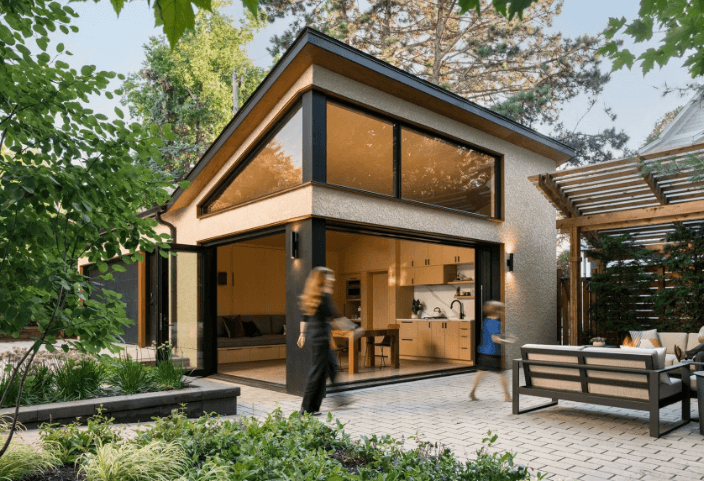
The Veneer Install Assumptions That Stall A Backyard ADU
Marisol had her 600 square foot backyard ADU essentially finished by the third week of June. Paint done, mini split humming, the little kitchen signed off by the inspector. The one thing left was a stone wainscot across the front elevation, and it stayed bare gray sheathing until nearly August. Nobody working on the unit could say how many days the stone would take or what had to be ordered alongside it, so the wainscot slid to the back of the schedule twice. She got unstuck by reading the installation method a stone veneer supply CA builders order from publishes for each kind of wall, then handing her installer a complete list instead of a vague ask. Stone is not the last cosmetic step on an ADU. It is a wall assembly with its own sequence and its own lead time, and scoping it early is the difference between a finish week and a stalled one.
Veneer Is Not Simply Glued To The Wall
The first assumption worth dropping is that manufactured stone gets buttered onto a finished wall and left to grab. Over wood framing it does not. What goes on first is a water resistive barrier, then a second layer of building paper in most California details, then metal lath fastened through to the studs, then a scratch coat of mortar that gets combed and left to cure before a single stone is set. Think of it the way a rain shell works over a fleece. The outer layer takes the weather, the layer underneath moves water back down and out, and the two are deliberately not bonded to each other. Skip a layer in that stack and the wall still looks right on day one; it is the fourth winter that tells on you. That is why a manufacturer’s installation page reads like a sequence rather than a product description, and why the substrate is named at the top of it.
The Substrate Sets The Schedule, Not The Style
Homeowners choose a texture first and assume the labor runs the same whichever one they land on. The profile barely moves the timeline. What moves it is what sits behind the stone. Set over a clean masonry substrate, a block stem wall or a sound concrete face, the stone can go up in one continuous pass with much less prep. Over wood framing the sequence stretches across days, because the mortar coats need time between them. The case we see most often on a detached ADU is a wood framed wall with a short band of concrete at the base, which means one elevation needs both methods and two different day rates. On a 600 square foot unit carrying maybe 180 square feet of wainscot, that is the gap between a two day install and a week of staged visits.
Hot Afternoons Change What A Mortar Day Holds
Weight and weather both decide how much wall actually gets covered, and neither one shows up in a color brochure. An April 2026 article from IIBEC, the International Institute for Building Enclosure Consulting, notes that adhered veneer units heavier than 30 pounds per square foot fall outside the prescriptive methods in TMS 402/602-22 as referenced by the 2024 International Building Code, and instead require an engineered design analysis. Most manufactured veneer sits comfortably under that threshold, which is a large part of why it ends up on ADUs at all. Then there is the heat. A Sacramento Valley afternoon at 104 degrees pulls water out of mortar before it can bond properly, so the setting happens in the morning and the batches get mixed smaller. Courses laid at three in the afternoon in August are the ones that come loose later.
One Supplier Beats Chasing Corners And Trim Separately
The expensive assumption is that stone is stone and everything around it can be picked up locally on a Saturday. Corners are where that falls apart. A veneer corner piece is manufactured rather than cut on site, and running short of them halfway up a wall stops the job cold, because nothing fakes the wrap at an outside edge. Sills, matching mortar dye, sealer and the correct lath all belong on the same order, and buying them from the one manufacturer is what keeps color lot and profile consistent across an elevation. What nobody can tell you cleanly is lead time. It swings with the color, the season and how much of the state is building at once, and I have never seen a number I would repeat as a rule.
Questions Owner Builders Ask Before The First Course
These three come up on almost every ADU conversation, usually a week later than they should. None of them need a mason to answer. They need a spec sheet and ten minutes.
Does The Wall Need Anything Behind The Stone?
Over wood framing, yes, and none of it is optional. You are building a drainage assembly first and a stone wall second. Over sound concrete or block the answer changes and the prep shortens considerably, which is why the method sheet for your specific substrate is the document to read before anything gets ordered.
How Far Ahead Do Corners And Trim Have To Be Ordered?
Put them on the same order as the flats, not on a second order once the wall is underway. Count outside corners in linear feet rather than in pieces, then add a cushion of roughly ten percent for breakage and cuts. Waiting to see how far the flats go is what turns a two day install into a three week hole in the schedule.
See also: Office 2021 Lifetime : Cost, Features, and Lifetime Access
Who Does The Work If I Am Not Hiring A General Contractor?
Plenty of owner-builders hire a mason directly for the stone and keep the rest of the finish work in their own hands. Ask whether that mason has set this particular product over your substrate before, and ask for the prep coats to be priced separately from the setting. A manufacturer’s support line will walk the spec through with you as well, which settles most disagreements before they reach the wall.
Plan The Stone Backward From The Finish Date
Run the calendar in reverse. Take the date you want the ADU rented or photographed, subtract the days the stone genuinely needs for your substrate, subtract the delivery window on top of that, and you arrive at an order date that is almost always earlier than anyone guessed. Marisol’s wainscot took a mason two and a half days once the material was sitting in the driveway; the four weeks before that were pure waiting. Pulling the spec sheet, the corner count and the accessory list from a single stone veneer supply CA source at the start is one afternoon of reading that buys back most of a month at the end. Bare gray sheathing is not a finished ADU, and of everything that can go sideways on a backyard build, it is the easiest one to prevent.