A Cold Back Bedroom Is a Repair Call Not a Space Heater
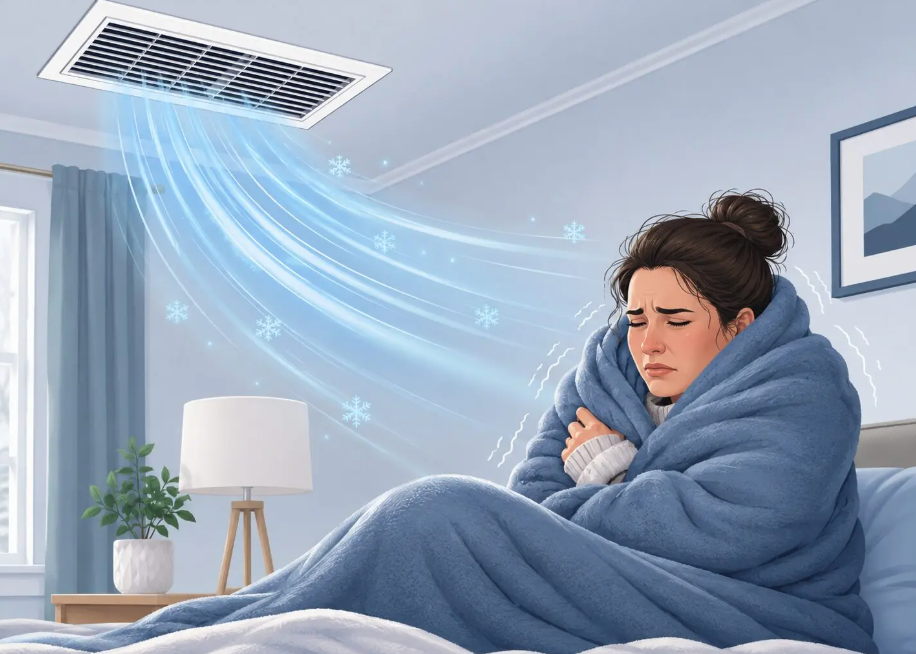
The back bedroom of a 1970s Olympia rambler sat at 58 degrees one January morning while the furnace ran almost without stopping. An 84-year-old woman slept in that room under three blankets, with two portable heaters plugged into the same 15-amp circuit. Her daughter had been meaning to book heating repair olympia wa since October, and then the cold snap arrived and held below freezing for nine days. Here is the short version of what that house actually needed. One cold room in a home where the furnace never shuts off is a mechanical fault you can measure, and only a repair visit that checks airflow and combustion together will fix it. The heaters were treating a symptom while a yellow-tipped burner flame went unexamined.
One Cold Room Points at Airflow Not Weather
A furnace that runs constantly is rarely a weak furnace. It is usually a furnace that cannot get its heat where the heat is supposed to go. Ducts fail quietly: a flex run crushed under a stored bed frame, a branch damper somebody closed in 2009 and forgot, a return path sized for a smaller house than the one that grew around it. In 1970s ramblers around Thurston County, the case we see most often is a bedroom at the far end of a long, sagging flex run, fed only after every other register upstream has taken its share.
Space heaters do not touch any of that. They move the problem onto the electric bill.
See also: Signs Your Home Needs a Plumbing Renovation
Space Heaters Hide the Fault and Add Risk
Start with the part that is not negotiable. If a carbon monoxide alarm sounds, if there is a burnt or sharp smell near the furnace, or if the burner flame is yellow and sooty instead of blue, get everyone out of the house first and call 911 or the gas utility from outside. Do not stop to open windows, and do not send one person back in to look around. A yellow flame means the burner is not completing combustion, and incomplete combustion is where carbon monoxide comes from.
The heaters carried a load problem of their own. Two 1,500-watt units pull about 12.5 amps each, so running both on one 15-amp circuit puts roughly 25 amps on a circuit rated for 15, which is a tripped breaker on a good night and warm cord insulation on a bad one. That furnace had been limping through two winters already, and heating the house on extension cords let everyone avoid noticing.
The U.S. Consumer Product Safety Commission’s carbon monoxide questions and answers fact sheet puts 2 habits ahead of every other precaution: install a CO alarm near the bedrooms in each sleeping area, and have the heating system inspected and serviced by a professional once every 12 months. This house had one alarm, in the hallway outside the kitchen, eleven years old. The room with the oldest occupant and the most portable heat had none at all.
What a Technician Measures on the First Visit
Measurement is the whole difference between a repair and a guess. The first two numbers are temperature rise and static pressure. Temperature rise is simply the difference between the air going into the furnace and the air coming out of it, and the rating plate inside the door gives an acceptable window, often something like 40 to 70 degrees. Read 84 and you are looking at a furnace choking on restricted airflow rather than an undersized one. Static pressure tells the same story from the duct side, and a system designed around 0.5 inches of water column that reads 1.1 is a system fighting its own ductwork every minute it runs.
Then comes the register itself. That back bedroom needed roughly 110 CFM to hold its temperature through a nine-day freeze. Call it 110. Honestly, closer to 135 once you count the uninsulated exterior wall and the bathroom sharing the same branch. Measured delivery at the register was 40, which explains a decade of blankets more clearly than any conversation about the weather ever could.
Last is the combustion side, where an analyzer probe goes into the flue and reads oxygen, carbon monoxide in parts per million, and flue temperature. A plugged burner, a cracked heat exchanger, a vent that lost its slope: each one leaves a signature in those readings. Free tools have their place, and the ENERGY STAR Home Energy Yardstick will tell you honestly whether your whole-house energy use is out of line with similar homes, which is useful context before anybody spends money. It cannot tell you the third burner is dirty.
Repair rather than replacement is where plenty of households are landing right now. The Air-Conditioning, Heating, & Refrigeration Institute reported that January 2026 shipments of central air conditioners and air-source heat pumps combined came to 440,819 units in the United States, down 29.2% from 622,901 units in January 2025. Fewer new systems going out means more older furnaces staying in service another season, which makes an honest diagnosis and a yearly inspection matter more, not less.
What the Week After a Repair Looks Like
The first afternoon is undramatic. A crushed flex run gets replaced, a closed damper opens, the burners come out and go back clean, and the bedroom register starts moving air you can feel with the back of your hand. That night the room holds in the upper 60s with the door shut and no heater running at all, while the furnace cycles on and off instead of running flat out.
By the end of the first week the pattern shows up in the thermostat history: shorter cycles, fewer of them, and a house that recovers in twenty minutes after the morning setback instead of ninety. By the third week the gas bill arrives and settles the argument, and the electric bill drops alongside it, since two heaters running most of the day had been quietly adding real money. At the one-year mark comes the step people skip, which is the annual inspection, booked before October, back when a technician can come out the same week you call.
Calling Early Beats Heating One Room Alone
A cold back bedroom is information. It says the distribution side of the system has a fault, and it often says the combustion side deserves a look too, while somebody is already there with instruments in hand. Families who search heating repair olympia wa in October get an appointment on a Tuesday; the ones searching on day four of a freeze get a waiting list and a rented heater. Neither the flame color nor the airflow number improves because the forecast did. Book the visit while the house is merely uncomfortable, and keep a working CO alarm on every sleeping level no matter how the furnace is behaving.